

In the hushed, high-pressure world of professional kitchens, where every second counts and every ingredient is scrutinized, a quiet revolution has been taking place. It’s not about a new cooking technique or a flashy piece of equipment. It’s about a fundamental shift back to basics, to purity, to the very essence of seasoning. The secret weapon? Fine Himalayan pink salt.
Gone are the days when salt was merely a white, uniform commodity. Today’s discerning chefs are turning to this vibrant, mineral-rich crystal for one primary reason: it delivers a pure, unadulterated flavor that enhances food without overpowering it. But what is it about this specific grind—the fine Himalayan pink salt—that has made it the darling of culinary experts from Michelin-starred restaurants to avant-garde gastropubs? Let’s delve into the reasons behind this seismic shift in the culinary landscape.
A Culinary Gem from the Heart of the Himalayas
Before we understand why the fine grind is so crucial, we must appreciate the source. Himalayan pink salt is a relic from an ancient, pristine world. Harvested from the Khewra Salt Mine in Pakistan, it dates back over 250 million years, formed from the evaporation of primordial seas. Shielded from modern-day pollution, this salt is celebrated for its remarkable purity and its unique composition of 84 trace minerals and electrolytes, including potassium, magnesium, and calcium. These minerals are responsible for its distinctive pink hue and, more importantly, its complex flavor profile.
Unlike highly processed table salt, which is stripped of its natural minerals and often contains anti-caking agents, Himalayan pink salt is minimally processed. This means you are tasting salt in its most authentic form. The move towards fine Himalayan pink salt is a move towards this authenticity, but with the practical precision a chef demands.
The Chef’s Choice: Why “Fine” Makes All the Difference
While coarse Himalayan rock salt is excellent for salt blocks, brining, and garnishing, it’s the fine grain version that has become the undisputed workhorse in daily cooking. Here’s a breakdown of why this specific texture is preferred for achieving pure flavor.
1. Unparalleled Dissolution and Distribution
The primary advantage of fine ground Himalayan pink salt is its rapid and even dissolution. When seasoning a sauce, a soup, or a piece of meat, a chef needs the salt to integrate seamlessly. Large, coarse crystals can create pockets of intense salinity or fail to dissolve entirely, leading to an inconsistent flavor experience.
Fine grain Himalayan salt disperses uniformly, ensuring every bite is perfectly seasoned. This is a non-negotiable in professional cooking, where consistency is king. Whether it’s incorporated into a dry rub or dissolved in a delicate vinaigrette, the fine grind guarantees that the salt’s pure flavor enhances the dish as a whole, rather than appearing in distracting bursts.
2. Precision Seasoning for Discerning Palates
A chef’s palate is their most valuable tool. Fine pink Himalayan salt allows for a level of precision that coarse salt simply cannot match. Its light, free-flowing consistency makes it easy to pinch and sprinkle with exact control, allowing chefs to “season to taste” with incredible accuracy. This control is essential for drawing out the natural flavors of high-quality ingredients without masking them. The goal is to make the tomato taste more like a tomato, the steak more like a steak—and fine Himalayan pink salt accomplishes this with finesse.
3. A Clean, Subtle Salinity That Enhances, Not Overpowers
This is the core of the flavor argument. Many chefs describe the taste of Himalayan salt as cleaner and less harsh than iodized table salt. The presence of trace minerals imparts a subtle, rounded salinity that lacks the bitter aftertaste sometimes associated with processed salts.
When used in its fine ground form, this clean flavor profile is delivered efficiently. It melds into the food, elevating its inherent flavors rather than imposing a generic “salty” taste. This is the definition of pure flavor—it’s the difference between hearing a single, clear note from a tuning fork versus a cacophony of sounds.
Fine Himalayan Pink Salt vs. Coarse: A Chef’s Practical Guide
Understanding the functional difference between grinds is key. It’s not that one is better than the other; it’s that they are tools for different jobs.
Fine Himalayan Pink Salt: Think of this as your “everyday” or “table” salt. Its benefits shine in:
General Cooking & Baking: Seasoning during the cooking process, adding to doughs, and baking.
Finishing at the Table: Allowing diners to add a final pinch.
Spice Rubs and Blends: Ensuring even distribution of all seasonings.
Marinades and Brines: Dissolving quickly for deep flavor penetration.
Coarse Himalayan Rock Salt: This is a “specialist” salt, perfect for:
Salt Blocks & Platters: Used for cooking or serving food.
“Salt Crust” Baking: Creating a crust for fish or meat.
Grinder-Only Use: For a final, textural garnish.
For the core task of seasoning during cooking, fine grain pink Himalayan salt is the undisputed champion for its utility and consistency.
Beyond the Shaker: The Multifaceted Uses of Fine Pink Himalayan Salt
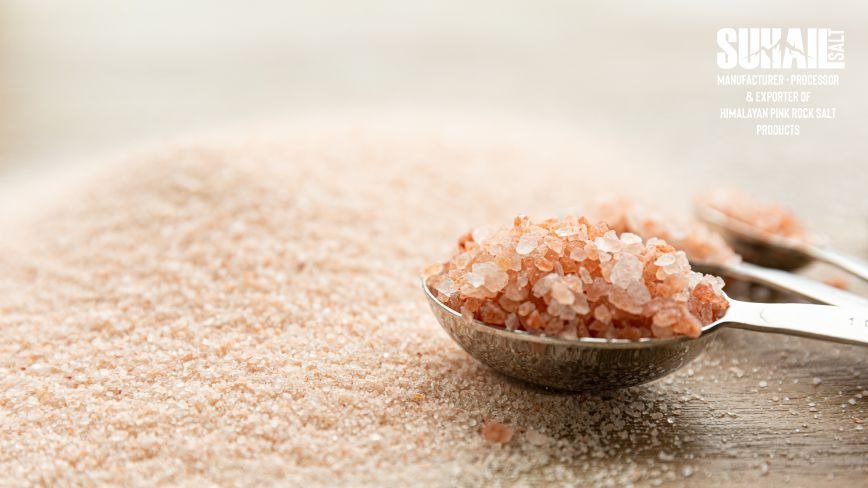
The versatility of fine Himalayan salt extends far beyond the stovetop. Its uses are a testament to its value in a professional setting.
Creating Signature Seasoning Blends: Many chefs create their own signature blends by mixing fine ground Himalayan salt with dried herbs, spices, and citrus zest. The fine texture ensures a homogeneous mix.
Perfecting Cured and Dried Foods: The consistent grain size is ideal for curing meats and fish, as it draws out moisture evenly and predictably.
Cocktail and Bar Science: A pinch of fine pink Himalayan salt can balance the sweetness in a cocktail, round out the bitterness, and elevate the overall flavor profile, much like it does with food.
Addressing the Health-Conscious Palate: The Added Benefits
While chefs are primarily driven by flavor, the perceived health benefits of fine Himalayan salt are an added bonus that resonates with today’s health-conscious diners. Although its mineral content is trace, it is a more natural alternative to processed table salt. It contains no additives, anti-caking agents, or iodine (which can sometimes impart a metallic flavor). By using Himalayan fine salt, chefs can confidently state that they are using a pure, natural product, aligning with the modern demand for clean eating.
The Economic Sense: Opting for Fine Himalayan Pink Salt in Bulk
For a busy restaurant, efficiency and cost-effectiveness are paramount. This is where purchasing fine Himalayan pink salt bulk makes perfect sense. Buying in large quantities ensures a consistent supply of a key ingredient, reduces packaging waste, and is significantly more economical per kilogram. Having a bulk container of this culinary workhorse in the kitchen station is a standard practice for chefs who refuse to compromise on quality or practicality.
Conclusion: The Unmistakable Mark of a Modern Chef
The shift towards fine Himalayan pink salt is more than a trend; it’s a reflection of a deeper culinary philosophy. It represents a commitment to purity, a respect for natural ingredients, and a dedication to achieving the pinnacle of flavor. It is a tool that offers the control, consistency, and clean taste that professional cooking demands.
For the chef who views their kitchen as a laboratory and their plate as a canvas, fine Himalayan pink salt is not just a seasoning—it’s an essential pigment for painting with flavor. It’s the subtle, almost imperceptible touch that allows the true character of their ingredients to shine through, resulting in a dining experience that is, in a word, pure.
Why Chefs Now Favor Fine Himalayan Pink Salt for Pure ( FAQS )
1. What is fine Himalayan pink salt and how is it different from regular salt?
Answer: Fine Himalayan pink salt is a naturally occurring rock salt mined from the ancient salt deposits in the Punjab region of Pakistan. Its distinctive pink color comes from trace minerals, primarily iron oxide. The key difference from regular table salt is that it is unprocessed and contains no anti-caking agents or additives. While table salt is almost pure sodium chloride, fine Himalayan pink salt offers a more complex flavor profile and a cleaner, less bitter salinity due to its natural mineral content.
2. Why do chefs prefer fine grind over coarse Himalayan salt for cooking?
Answer: Chefs favor the fine grain Himalayan salt for its practical culinary advantages. The small, consistent crystals dissolve quickly and distribute evenly, allowing for precise seasoning control. This ensures every bite of food is perfectly seasoned without unexpected crunchy bursts of salt. While coarse Himalayan rock salt is great for garnishing or salt blocks, the fine ground version is the ultimate workhorse for general cooking, baking, and creating balanced spice rubs.
3. What are the main benefits of using fine Himalayan pink salt?
Answer: The primary benefits of fine pink Himalayan salt are culinary and purity-related. It provides a pure, clean flavor that enhances food without a metallic aftertaste. Its fine texture allows for even seasoning and quick dissolution. Additionally, as a natural, unrefined product, it is free from synthetic additives. While it contains over 80 trace minerals, they are in minute amounts, so its main health benefit is being a more natural alternative to highly processed table salt.
4. Can I use fine Himalayan pink salt in a salt grinder?
Answer: It is not recommended to use fine ground Himalayan pink salt in a salt grinder. The grinders are designed to break down large, coarse crystals. Since this salt is already pre-ground to a fine consistency, using it in a grinder can clog the mechanism and result in an overly powdery salt. For the best experience, use a salt shaker, cellar, or simply pinch it from a jar.
5. Is fine Himalayan pink salt good for baking?
Answer: Absolutely. Fine Himalayan salt is an excellent choice for baking. Its uniform, fine grain ensures it incorporates evenly into doughs, batters, and dry mixes, providing consistent flavor throughout your baked goods. This prevents pockets of saltiness and allows the other flavors, like chocolate or caramel, to shine. Many bakers find its pure, clean taste superior to iodized table salt for creating professional-quality pastries and breads.
6. What’s the best way to store fine Himalayan pink salt to keep it dry?
Answer: The best way to store fine grain pink Himalayan salt is in an airtight container in a cool, dry place. While its natural mineral content makes it less prone to clumping than pure table salt, any salt can absorb moisture from the air. Using a sealed jar or a salt cellar with a tight-fitting lid will preserve its free-flowing texture. Unlike finer iodized salt, it typically does not require added anti-caking agents to stay dry.
7. Where can I buy fine Himalayan pink salt in bulk for my kitchen?
Answer: You can purchase high-quality fine Himalayan pink salt in bulk directly from specialty suppliers and reputable online retailers. For consistent quality and the best value for restaurants, food businesses, or home enthusiasts, sourcing from a dedicated salt supplier like Suhail Salt ensures you receive a pure, food-grade product in larger, cost-effective quantities, guaranteeing you never run out of this essential culinary ingredient.