
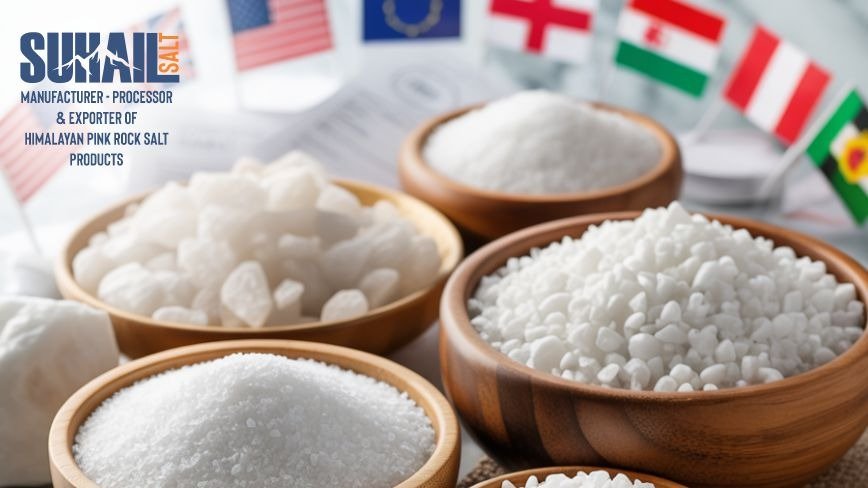
The debate of Pink Salt VS Normal Salt centers on processing and nutrient density. Himalayan pink salt is an unrefined rock salt hand-mined from the Khewra Salt Mine, containing 84 trace minerals like Potassium, Magnesium, and Calcium. Conversely, normal salt (table salt) is heavily processed, often containing anti-caking agents but fortified with iodine. While pink salt vs regular salt sodium levels are similar, pink salt offers a minimally processed alternative for those seeking a natural electrolyte source.
In the modern culinary world, the salt shaker is no longer a simple choice. As health-conscious consumers and professional chefs alike scrutinize their ingredients, the comparison of Pink Salt VS Normal Salt has become a pivotal topic. Whether you are seasoning a prime rib or balancing a morning electrolyte drink, understanding the difference between pink Himalayan salt and sea salt or table salt is essential for both flavor and wellness.
At Suhail Salt, the best Himalayan Pink Rock Salt products manufacturer & exporter, we recognize that purity is paramount. Sourced from the ancient Khewra Salt Mines in Pakistan, our pink salt represents the gold standard of unrefined rock salt. In this guide, we will break down the science, the trace minerals, and the culinary applications to help you decide which belongs in your kitchen.
The Core Differences: Processing and Origin
To understand Pink Salt VS Normal Salt, we must look at where they come from and how they reach your table.
Normal Salt (Table Salt)
Normal salt is typically harvested from salt deposits underground or through vacuum evaporation of brine. It undergoes significant industrial processing to remove “impurities,” which unfortunately includes beneficial minerals. To ensure it flows easily from a shaker, manufacturers add anti-caking agents like sodium aluminosilicate or magnesium carbonate. Furthermore, since the 1920s, most normal salt has been “iodized” to prevent iodine deficiency risks and support thyroid health.
Pink Himalayan Salt
Himalayan pink salt is a fossilized salt found deep within the earth, primarily in the Khewra Salt Mine. It is millions of years old and protected from modern-day environmental pollutants. Because it is hand-mined and minimally processed, it retains its natural crystalline structure. The iconic rosy hue is attributed to Iron Oxide, a mineral not found in significant quantities in white salt.
Pink Salt VS Normal Salt: Mineral Content Analysis
When comparing pink salt vs white salt mineral content, the differences are chemically significant. While both are primarily composed of sodium chloride, the “impurities” in pink salt are actually nutrients the body craves.
| Mineral | Himalayan Pink Salt (Suhail Salt) | Normal Table Salt |
| Sodium Chloride | ~98% | ~99.9% |
| Potassium | Found Naturally | Negligible |
| Magnesium | Found Naturally | Negligible |
| Calcium | Found Naturally | Negligible |
| Iron Oxide | Gives Pink Color | None |
| Additives | 100% Natural | Anti-caking agents |
Because of these trace minerals (Potassium, Magnesium, Calcium), pink salt is often viewed as a natural electrolyte source that helps maintain electrolyte balance better than refined alternatives.
Health Implications: Is Pink Salt Better for You?
A frequent question among our B2B clients and health enthusiasts in the USA is: Is pink salt better than regular salt for high blood pressure?
Sodium Levels and Hypertension
Research into pink salt vs regular salt sodium levels shows that pink salt has slightly less sodium chloride per teaspoon. This is largely because the crystals are often larger and less dense than the fine grains of table salt. For those managing cardiovascular health or hypertension, using pink salt can lead to a lower overall sodium intake if measured by volume.
Thyroid Health and Iodine
One critical factor in the Pink Salt VS Normal Salt debate is iodine. Iodized salt was created to combat goiters. Himalayan salt is a non-iodized salt. However, for those who consume a diet rich in seafood, dairy, or eggs, they likely receive enough natural iodine, making the minimally processed alternative of pink salt a safer choice to avoid synthetic additives.
Culinary Uses: From Kitchen Staple to Finishing Salt
In the kitchen, the Pink Salt VS Normal Salt choice often comes down to texture and “mouthfeel.”
- Cooking Salt: Normal salt dissolves quickly, making it ideal for baking where precise measurements are vital.
- Culinary Finishing Salt: Coarse pink salt adds a crunch and a burst of mineral flavor to steaks, salads, and chocolates.
- Salt Slabs: Unique to the Himalayan variety, large salt slabs from Suhail Salt can be used to sear meats or chill appetizers, providing a unique aesthetic and flavor profile that normal salt cannot replicate.
Why Suhail Salt is the Trusted Global Supplier
As a leading Himalayan pink salt bulk manufacturer & exporter, Suhail Salt understands the technical requirements of global B2B buyers. Whether you are a retailer in the USA or a distributor in Europe, you need assurance that your Pink Salt VS Normal Salt inventory meets international standards.
Our Bulk Supply Advantages:
- Purity Guarantee: Hand-mined from the Khewra Salt Mine, ensuring 100% natural composition.
- Customization: We provide custom grinding (fine, coarse, powder) to match your specific culinary or industrial needs.
- Private Labeling: We help brands launch their own pink salt lines with OEM manufacturing and private labeling services.
- Compliance: Our facilities follow strict quality control systems with full export documentation support.
FAQs: People Also Ask
Q: Is pink salt actually healthier than table salt?
A: While both are sodium, pink salt is a minimally processed alternative that lacks the anti-caking agents and chemical bleaches found in normal salt. Its trace minerals also provide a more complex nutrient profile.
Q: Can I swap table salt for pink salt in any recipe?
A: Yes, however, because of the grain size difference, you may need to adjust your measurements. Fine-ground pink salt is a 1:1 replacement, but coarse salt takes up more space in a spoon.
Q: Why is Suhail Salt considered the best manufacturer?
A: We prioritize sustainability and quality. Our salt is sourced from the most mineral-rich sections of the Khewra Salt Mine and processed in state-of-the-art facilities that meet USA and European standards.
Conclusion: Making the Right Choice
The choice between Pink Salt VS Normal Salt ultimately depends on your health goals and culinary preferences. If you value a natural electrolyte source, unrefined rock salt, and a product free from synthetic chemicals, Himalayan pink salt is the superior option. While normal salt serves a purpose in providing iodine, the holistic Himalayan pink salt vs table salt health benefits make the pink variety a staple for the modern home.
For wholesalers and retailers looking to supply the highest quality minerals, Suhail Salt is your reliable partner. We ensure that the difference between pink Himalayan salt and sea salt or table salt is clear to your customers through our premium, lab-tested products.
Stay Connected with Suhail Salt
I believe in the power of community and continuous learning through shared insights. Whether you’re interested in discussing the latest trends in the Himalayan Pink Salt industry, exploring potential B2B partnerships, or simply staying updated with our latest mineral-rich innovations, I’d love to stay in touch.
You can find me sharing professional insights and industry news on LinkedIn, or follow our daily updates and behind-the-scenes content on Facebook/Instagram. Let’s connect and build something meaningful together!